

【PROFILE / HISTORY】
TOSHIYUKI KOKUBU
Pianist, Keyboardist, Composer
Producer of SAMURAI LABEL Inc.
■ Early 1970s: The Legend of the 13-Year-Old "Prodigy" and a Striking Debut
Receiving his first piano lessons from his father at the age of 9, his extraordinary talent was already roaring through the music scene of his hometown, Osaka, in the early 1970s when he was just 13. "There’s an unbelievable guy out there," "A prodigy has appeared." Later, when he formed a band with former SOOO BAAD REVUE members Masakazu "Baker" Doi and Tadashi Nagamoto, an Osaka music producer from that era revealed, "I've known about you since you were 13. Back then, you were rumored to be a 'prodigy'." Even in his early teens, before he had established his name, he was already an object of awe among the industry's top echelon.
As if to prove those rumors, his full-fledged career as a pianist and keyboardist began at the young age of 15. Centered on his powerful piano touch, he ferociously dominated the Hammond organ, Fender Rhodes, and synthesizers. His playing style soon caught the eye of Ryuichiro "Weeping Harp" Senoh, a heavyweight in the Japanese blues scene, and Kokubu raced through the dawn of blues in Japan as its youngest professional.
Around the age of 16, when his old friend Hiroshi Sato had joined Shigeru Suzuki's band "Hucklebuck", Kokubu was a terrifying teenager who would casually drop by the live houses where they were performing, jump on stage, and play the piano fiercely, shaking the very atmosphere of the venues.
At 17, he participated in his first recording with "Makoto Kubota & SUNSET GANG." He met Haruomi Hosono at the "Sounds of Hawaii Studio" in Hawaii, joining as a pianist/keyboardist. The "prodigy" who became the first in Japan to master New Orleans-style blues piano forced open a new door in the Japanese music scene.
The recording of the band's album Second Line became a historic session where Japanese and American legends intersected. He performed proudly alongside global giants such as Levon Helm of The Band, legendary Stax soul guitarist Steve Cropper, swamp pop maestro Bobby Charles, and authentic New Orleans keyboardist Ronnie Barron. With top domestic musicians like Tatsuo Hayashi of Tin Pan Alley also participating, they engraved the finest roots music onto the record with a stellar lineup.
■ The Backbone of Japanese Groove and the "Resonance of Soul"
In the 1970s, he thrived as the keyboardist for the monster band "SOOO BAAD REVUE," which sent massive shockwaves through the Japanese music scene. Entering the 1980s, he joined "Voice & Rhythm." Alongside old friends Osamu Ishida and Mari Kaneko, he recorded their 1st album, continuing to robustly cultivate the soil of Japanese soul and funk music.
Throughout his career, he accumulated countless historic sessions with Japan's absolute peak artists, including Tatsuro Yamashita, Johnny Yoshinaga, Char, June Yamagishi, Shuichi "Ponta" Murakami, Motohiko Hino, and Kenji Takamizu.
What must be highlighted here is the magnitude of the influence he had on musicians fighting in the same era. Keyboardist Hiroyuki Namba—who played with Mari Kaneko & Bux Bunny alongside Yoshihiro Naruse and later led the Japanese progressive rock scene with "SENSE OF WONDER"—was one of many heavily influenced by the intense groove of Kokubu's piano and Hammond organ. This is a fact that speaks volumes about how Kokubu's playing shocked his peers as an extraordinary, "authentic" force in the undercurrent of the Japanese music scene at the time.
His overwhelming live performances were always filled with enthusiasm and miracles. During a gig in Roppongi, the absolute pinnacle of R&B drumming, James Gadson, casually showed up and jumped in to play drums with June Yamagishi, unfolding a legendary night. This was not something that could be boxed into a superficial word like "respect"; it was a "resonance of soul" between authentic musicians from Japan and the U.S. This developed into a deep bond that completely transcended borders, leading Gadson to rush to a later SOOO BAAD REVUE reunion live show, and even casually drop by a certain club in Roppongi, Tokyo, where Kokubu played every day.
In the Japanese music industry of that time, there was no other group that deepened such a casual, equal "everyday exchange" with top foreign artists, recording together and clashing sounds at a soul level. The front lines of a true "Japan-U.S. exchange battle," which never appears in official histories, existed right there.
■ Sessions Across the Sea and Unfading Backstage Memories
The extreme groove born from that "everyday exchange" inevitably culminated in historic sessions with the world's apex. At Masaki Ueda's live show in 1984, he executed a live recording with Sly & Robbie. He also joined the recording of Jazz Funk Masters featuring Louis Johnson - Mo' Funk, featuring slap bass maestro Louis Johnson.
In 1987, alongside Bobby Watson (Rufus & Chaka Khan), Marvin Baker, and his sworn ally June Yamagishi, he participated in recordings related to the smash-hit gospel musical Mama, I Want to Sing! He backed up the world's top singers, including D'Atra Hicks with her astonishing high tones. Years later, when Bobby sent a photo from that time, they both agreed, "It was the best band, but I can't remember the female singer's name." Furthermore, looking at the photo, they asked, "Who is that weird guy with the beard?"—not even recognizing their own ally, June Yamagishi, who was supposed to be in the picture. This hilarious anecdote is the ultimate, authentic medal of honor between men who clashed sounds on the world's front lines.
In the 1990s, he accomplished a historic co-performance with modern jazz giant Walter Bishop Jr., sharing a stage at a massive outdoor concert venue. When Kokubu arrived at the venue, Shuichi "Ponta" Murakami, who was rehearsing for a different job (backing Kenji Sawada), spotted him, immediately stopped playing the drums, stood up, and waved with a huge smile shouting "Yeah!" It is a thrilling scene that conveys the passionate bond between top musicians of the time.
There is another episode from a George Duke performance in Osaka, where Kokubu lived at the time. Watching the show simply as a member of the audience, Kokubu was suddenly pointed out by George himself from the stage and told to "Come up." Walking straight onto the stage, he pulled off the incredible feat of engaging in a passionate impromptu jam session, capturing the very essence of jazz-funk.
Exchanging sounds with Stevie Wonder's protégé CINDY, The Headhunters' Paul Jackson, and soul guitar maestro David T. Walker, he literally "lived" through more historic sessions than could possibly be written here.
■ 2026 Present — Launch of SAMURAI LABEL.
A half-century spent thoroughly refusing to have his soul packaged into pre-made frameworks, bowing to no one, and continuing to pursue the ultimate "world standard" while exhilaratingly enjoying his own music.
Currently, armed with the concept of "Extended Harmony," a theory by Paul Hindemith, he has launched the stronghold "SAMURAI LABEL Inc." to present his music directly to the world without an ounce of compromise. Forming the powerhouse contemporary jazz trio "THE SUPER 3®" with Sigeo Hirayama (Drums) and Tatsuya Fujimura (E/A. Bass), he is taking frontline command to unleash an overwhelming impact upon the world toward the release of their debut album.

–1975's− Teruyuki Kokubu

SOOO BAAD REVUE
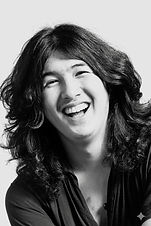
Toshiyuki Kokubu
